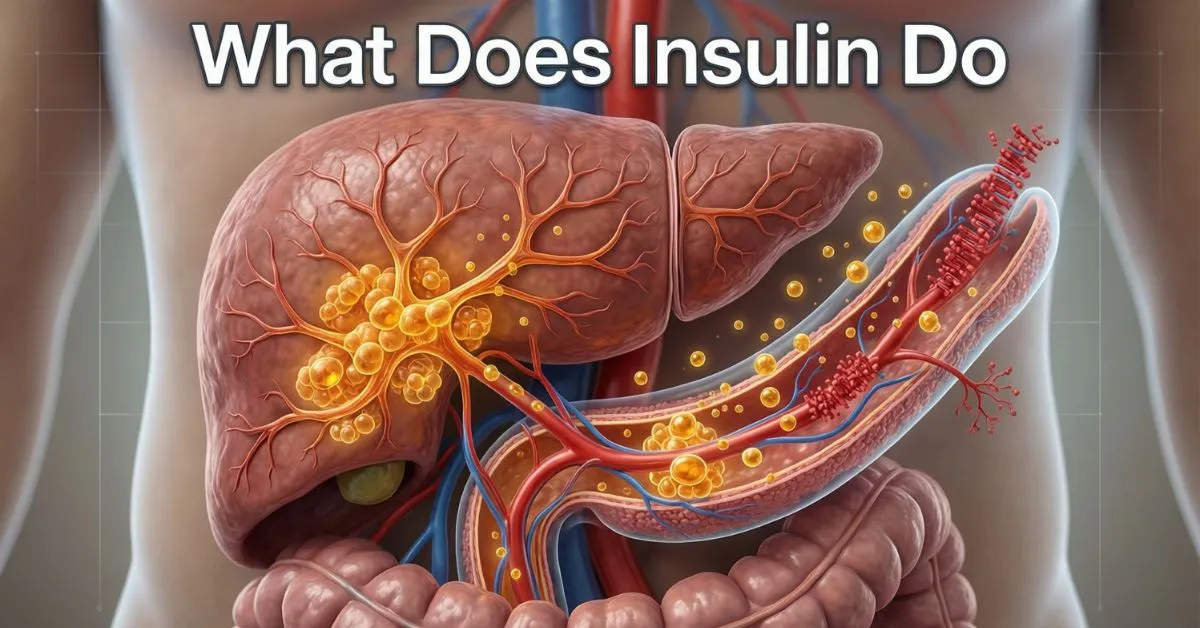
The first time I heard about insulin, I honestly had no idea what it did. My doctor mentioned it casually during a checkup, and I pictured some kind of magical “sugar fighting potion” inside my body.
If you’ve ever wondered what insulin actually does, you’re not alone!
Quick Answer:
Insulin is a hormone produced by your pancreas. It helps your body turn sugar from food into energy and keeps your blood sugar levels balanced. Think of it as your body’s natural “key” that unlocks energy from the food you eat.
🧠 What Does Insulin Do?
Insulin is a hormone made by the beta cells in the pancreas. Its main job is to regulate blood sugar (glucose) in your body. When you eat carbs like bread, pasta, or fruit they break down into glucose. Insulin signals your cells to absorb this glucose, turning it into energy for your muscles, brain, and other organs.
Without insulin, glucose stays in the blood, leading to high blood sugar levels. Over time, this can cause serious health problems, like diabetes.
Example:
After breakfast, your blood sugar rises. Insulin helps move that sugar into your cells so you feel energized instead of sluggish.
In short:
Insulin = Hormone = Helps your body use sugar for energy and keeps blood sugar balanced.
📱 Where Is Insulin Important?
While insulin isn’t “used” like a social media slang, it’s crucial in everyday life because it affects:
- 🍎 Diet & nutrition Helps your body process carbohydrates.
- 🏃 Exercise Provides energy to muscles.
- 🧠 Brain function Glucose is your brain’s main fuel.
- 💊 Medical treatments People with diabetes may need insulin injections.
Insulin is essential for everyone, but most discussions about it happen in healthcare, nutrition, or fitness contexts. It’s formal in medical terms but easy to understand when explained simply.
💬 Examples Of Insulin In Action
Here are real life scenarios that show what insulin does:
- Breakfast Energy
- You eat oatmeal 🍚.
- Your pancreas releases insulin to help cells absorb sugar for energy.
- After a Sugary Snack
- Blood sugar spikes after a candy bar 🍬.
- Insulin helps bring your blood sugar back down.
- During Exercise
- You go for a run 🏃.
- Insulin helps your muscles take in glucose for energy.
- For Someone with Diabetes
- Type 1 diabetes: the body doesn’t make insulin.
- Type 2 diabetes: the body doesn’t respond to insulin properly.
- Fasting or Between Meals
- Blood sugar drops naturally.
- Insulin levels fall too, letting your body release stored energy.
🕓 When Insulin Levels Matter
✅ When Proper Insulin is Important
- After meals to process glucose efficiently.
- During physical activity for energy use.
- In managing diabetes or preventing high blood sugar.
❌ When Insulin Is Too High or Low
- Excess insulin can cause hypoglycemia (low blood sugar).
- Too little insulin leads to hyperglycemia (high blood sugar).
- Not managing insulin can result in long term health problems like nerve damage, heart disease, or kidney issues.
Comparison Table:
| Context | Example Action | Why It Works |
|---|---|---|
| Normal meal | Pancreas releases insulin | Keeps blood sugar balanced |
| Exercise | Muscles absorb glucose | Provides energy efficiently |
| Diabetes management | Insulin injection or pump | Controls blood sugar safely |
| Fasting | Insulin decreases | Body releases stored energy |
🔄 Similar Hormones Or Alternatives
| Hormone | Function | When It Works |
|---|---|---|
| Glucagon | Raises blood sugar when it’s too low | Between meals or during fasting |
| Amylin | Slows glucose absorption | After meals |
| Incretins | Stimulate insulin release after eating | Digestive process |
| Adrenaline | Raises blood sugar in stress situations | Fight-or-flight responses |
❓ FAQs
Q1: Is insulin only for people with diabetes?
No! Everyone produces insulin naturally. People with diabetes may need extra insulin because their bodies can’t make or use it properly.
Q2: Can insulin help with weight loss?
Indirectly. Insulin controls blood sugar and energy storage. Maintaining balanced insulin helps prevent fat storage from excess sugar.
Q3: What foods affect insulin the most?
Carbs like bread, rice, pasta, sugary drinks, and fruit cause insulin to rise the most. Protein and fat have smaller effects.
Q4: How can I keep my insulin levels healthy?
Eat balanced meals, exercise regularly, avoid excessive sugar, and manage stress.
Q5: Can insulin injections be dangerous?
Yes, if used incorrectly. Taking too much insulin can lower blood sugar dangerously. Always follow medical guidance.
💡 Conclusion
Insulin may sound complicated, but it’s really your body’s natural energy manager. It turns sugar into fuel, keeps your blood sugar steady, and plays a huge role in your overall health.
You’re eating, exercising, or managing diabetes, insulin is at work behind the scenes making sure your body runs smoothly. Understanding what it does helps you make smarter choices about food, exercise, and lifestyle.

Ehan Scribbles is a talented author at xnamez.com, known for his deep insight into the art of naming. With a creative mind and a unique writing flair, he explores the power and meaning behind names, helping readers discover the perfect ones that reflect identity and personality.