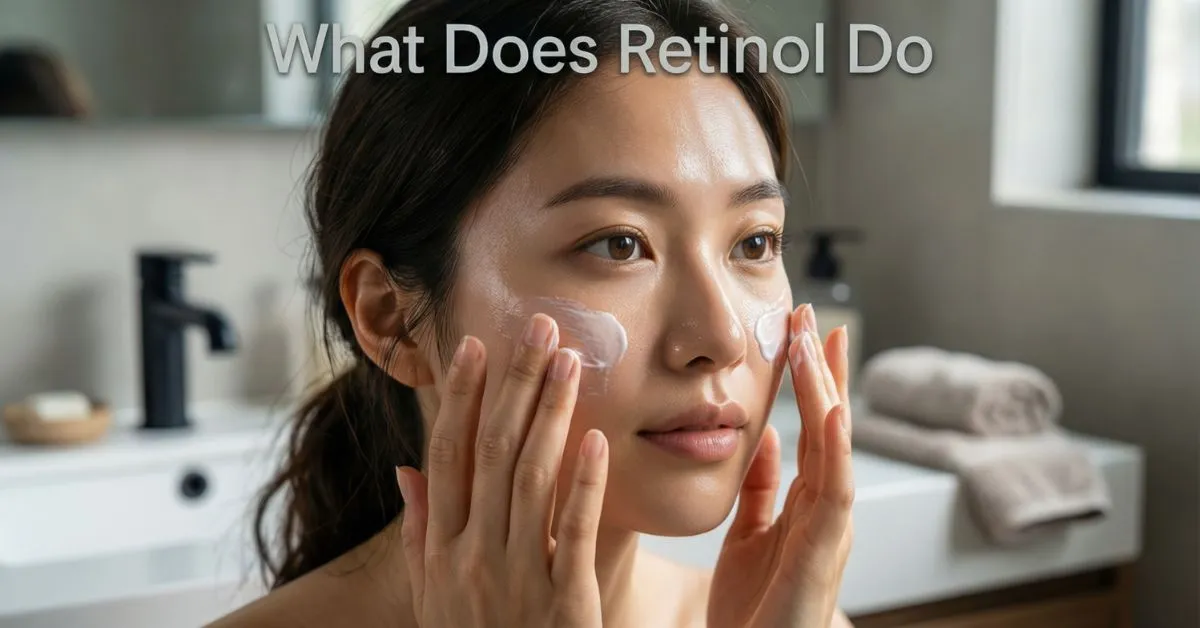
Have you ever heard someone rave about retinol and wondered, “Wait… what does that actually do?” You’re not alone! Retinol has become a skincare superstar, but if you’re new to the beauty world, its benefits and uses can feel overwhelming.
Don’t worry we’ve got you covered. In this guide, we’ll break down exactly what retinol does, how it works, and how to use it safely so you can get glowing, healthier looking skin.
Quick Answer:
Retinol is a form of Vitamin A that helps renew skin cells. It’s a gentle but powerful way to reduce wrinkles, fight acne, and improve overall skin texture.
🧠 What Does Retinol Do?
Retinol is a Vitamin A derivative that works at the cellular level. It speeds up skin cell turnover, meaning old, dull skin sheds faster and new, fresh skin comes to the surface.
Some of the main things retinol does:
- Reduces fine lines and wrinkles
- Fights acne by keeping pores clear
- Improves skin tone and texture
- Minimizes dark spots and hyperpigmentation
Example:
If your skin looks tired or uneven, using retinol can help it appear smoother and brighter over time.
In short: Retinol = Vitamin A derivative = promotes skin renewal, smoothness, and anti aging benefits.
📱 Where Is Retinol Commonly Used?
Retinol isn’t just a fancy ingredient it’s everywhere in skincare:
- 🧴 Serums & creams popular in anti aging and acne fighting products
- 🛍️ Over the counter skincare retinol is found in many accessible products
- 💊 Prescription strength formulas usually for severe acne or advanced wrinkles
- 🧖 Nighttime routines retinol is best used at night since sunlight can reduce its effectiveness
Tone: Retinol is suitable for everyday skincare but requires care it’s gentle with proper use but can cause irritation if overused.
💬 Examples Of Retinol In Skincare Routines
Here are some real life scenarios showing how people use retinol:
- Evening skincare:
- “I always use my retinol serum after cleansing, then follow with moisturizer 🌙”
- Fighting acne:
- “This retinol cream keeps my breakouts in check without drying my skin too much”
- Anti aging routine:
- “Started retinol last month, and my fine lines around the eyes are less noticeable 👀”
- Sensitive skin caution:
- “I mix retinol with moisturizer at first to avoid irritation”
- Weekly routine planning:
- “Week 1: twice a week, Week 2: every other night retinol introduction is slow!”
🕓 When To Use & When Not To Use Retinol
✅ When to Use Retinol:
- To reduce wrinkles and fine lines
- To prevent and treat acne
- To improve uneven skin tone
- As part of a nighttime routine
❌ When Not to Use Retinol:
- During pregnancy or breastfeeding (consult a doctor)
- On sunburned or irritated skin
- Without sunscreen during the day
- If you’re new and using a high-strength formula without building tolerance
| Context | Example Routine | Why It Works |
|---|---|---|
| Beginner | Apply 1–2 nights/week with moisturizer | Builds tolerance & reduces irritation |
| Daily skincare | Use at night after cleanser, before moisturizer | Ensures skin renewal overnight |
| Sensitive skin | Mix with moisturizer before applying | Minimizes redness & dryness |
🔄 Similar Ingredients Or Alternatives
| Ingredient | Meaning / Benefit | When to Use |
|---|---|---|
| Retinoid | Stronger Vitamin A derivative | For severe acne or wrinkles |
| Bakuchiol | Plant based retinol alternative | For sensitive skin or vegan routines |
| Retinaldehyde | Intermediate strength Vitamin A | Milder than prescription retinoids |
| Adapalene | Acne focused retinoid | Best for active breakouts |
❓ FAQs
Q1: How long does it take to see results?
A: Usually 4–12 weeks for texture improvement; 3–6 months for fine lines and dark spots.
Q2: Can I use retinol with other active ingredients?
A: Avoid mixing with strong acids (AHAs/BHAs) at first. Vitamin C in the morning is fine.
Q3: Can retinol make my skin worse before it gets better?
A: Yes, initial redness or flaking is normal. Start slowly and moisturize well.
Q4: Do I need sunscreen with retinol?
A: Absolutely! Retinol increases sun sensitivity. Always use broad spectrum SPF 30+ in the daytime.
Q5: What’s the best concentration for beginners?
A: Start with 0.25% 0.3% retinol. Increase gradually as your skin adapts.
Conclusion:
Retinol isn’t just hype it’s a skincare powerhouse. With consistent, careful use, it can smooth wrinkles, fight acne, and give your skin a healthy, radiant glow.
Start slow, protect your skin from the sun, and you’ll see the magic unfold. Your future self will thank you! ✨

Chase Nolan is an expert writer at xnamez.com, where he shares his deep passion for the art and meaning of names. Known for his creative insight and modern writing style, Chase explores the stories, origins, and trends behind names with precision and flair.