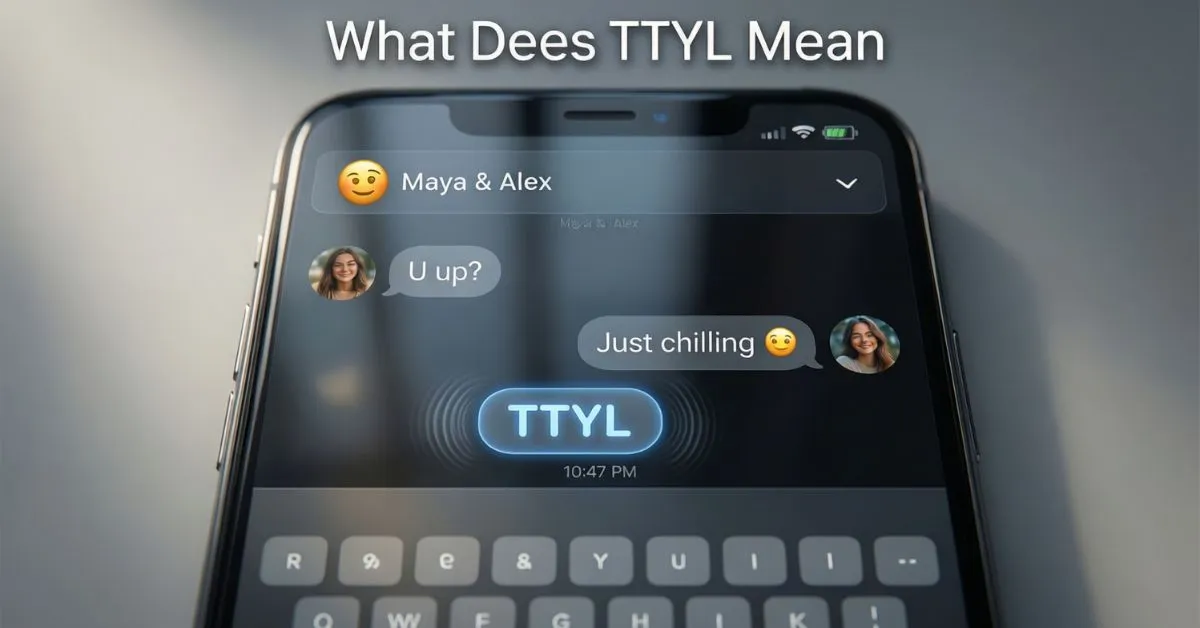
You’re chatting with a friend late at night, the conversation is flowing, and suddenly they end the message with “ttyl”.
You pause for a second, reread it, and think… wait, what does that even mean? 🤔
Don’t worry you’re not alone. Text slang can be confusing, especially when it pops up without warning.
Quick Answer:
TTYL means “Talk To You Later.” It’s a friendly and casual way of saying “I’ll talk to you later” or “catch up soon.” It’s commonly used when ending a chat politely without sounding rude or abrupt.
🧠 What Does TTYL Mean In Text?
TTYL is a popular internet and texting abbreviation that stands for Talk To You Later. People use it when they want to end a conversation but still keep things warm and friendly.
It doesn’t mean goodbye forever just a temporary pause in the chat.
Example:
I have to go eat dinner, ttyl.
This shows you’re leaving the conversation but plan to talk again soon.
In short:
TTYL = Talk To You Later = I’ll message you again soon
📱 Where Is TTYL Commonly Used?
You’ll see TTYL almost everywhere online where casual conversations happen:
- 📩 Text messages
- 📱 WhatsApp / Messenger
- 👻 Snapchat
- 📸 Instagram DMs
- 🎮 Gaming chats
- 🐦 Twitter / X replies
💡 Tone check:
- ✔️ Casual
- ✔️ Friendly
- ✔️ Social media friendly
- ❌ Not formal or professional
TTYL fits best in relaxed, everyday conversations.
💬 Examples Of TTYL In Conversation
Here are some real, natural chat style examples 👇
Example 1
A: gotta finish my homework
B: okay ttyl 📚
Example 2
A: my phone’s about to die
B: lol ttyl 🔋😂
Example 3
A: heading out rn
B: ttyl, drive safe 🚗
Example 4
A: talk later?
B: yeah ttyl 😊
Example 5
A: mom’s calling me
B: ttyl 🙈
Example 6 (slightly flirty)
A: i’ll miss you
B: aww ttyl 💕😉
🕓 When To Use & When Not To Use TTYL
Using TTYL at the right time matters. Here’s a quick guide:
✅ When to Use TTYL
- Casual chats with friends
- Ending a conversation politely
- Social media or DMs
- Light, friendly or flirty talks
- When you plan to talk again soon
❌ When Not to Use TTYL
- Formal emails
- Work or office communication
- Serious or emotional conversations
- Urgent situations
- Talking to clients or elders
Context Comparison Table
| Context | Example Phrase | Why It Works |
|---|---|---|
| Friend Chat | “No worries, ttyl 😄” | Casual & friendly |
| Work Chat | “We can discuss this later.” | Polite & professional |
| “I will follow up later today.” | Formal & clear | |
| Urgent Talk | “Call me now.” | Direct & serious |
🔄 Similar Slang Words or Alternatives
If you don’t want to repeat TTYL every time, here are some great alternatives:
| Slang | Meaning | When to Use |
|---|---|---|
| BRB | Be Right Back | Short break |
| GTG | Got To Go | Leaving now |
| CYA | See You | Friendly goodbye |
| TTY | Talk To You | Casual chats |
| L8R | Later | Super informal |
| CU | See You | Quick sign-off |
Each one has a slightly different vibe, but all are casual and conversational.
❓ FAQs
❓ Is TTYL rude?
No. TTYL is polite and friendly when used in casual conversations. It softens the exit instead of sounding abrupt.
❓ Is TTYL still used today?
Yes! While newer slang exists, TTYL is still widely used and understood across all age groups.
❓ Can TTYL be flirty?
It can be especially when paired with emojis like 😉💕. The tone depends on the conversation.
❓ Can I use TTYL at work?
It’s better to avoid it. Use professional phrases like “we’ll talk later” instead.
❓ What’s the difference between TTYL and GTG?
- TTYL = talk again later
- GTG = leaving right now
📌 Final Thoughts
TTYL is one of those classic text slangs that never really goes out of style. It’s simple, friendly, and perfect for everyday chats.
Now that you know what it means and how to use it, you’ll never feel confused seeing it again.
So next time you’re wrapping up a conversation, go ahead and type:
ttyl 👋😊

Ehan Scribbles is a talented author at xnamez.com, known for his deep insight into the art of naming. With a creative mind and a unique writing flair, he explores the power and meaning behind names, helping readers discover the perfect ones that reflect identity and personality.